University of Ljubljana, Faculty of Computer and Information Science (FRI)
Video stories about studying at FRI
From a freshman's first day to the jobs of the future
- Client
- University of Ljubljana, Faculty of Computer and Information Science (FRI)
- Year
- 2019–2021
The University of Ljubljana's Faculty of Computer and Information Science (FRI) trains people for jobs that often don't even have a name yet. It wanted to show prospective and current students what studying computer science is really like and where it can lead.
Between 2019 and 2021 we created six video stories for FRI: a video that helps freshmen find their way around the faculty, and a series on the careers of its graduates and the projects developed in its laboratories. From the first idea to the final edit.
In numbers
- 6
- Video stories for FRI between 2019 and 2021.
- 3
- Graduates in the Jobs of the Future series.
- 2
- Languages: the freshman video also in English, for international students.
- 1
- Team that took every story from the first idea to the final edit.
The common thread
Studying computer science isn't just coding. It leads to jobs that don't exist yet.
This is Luka
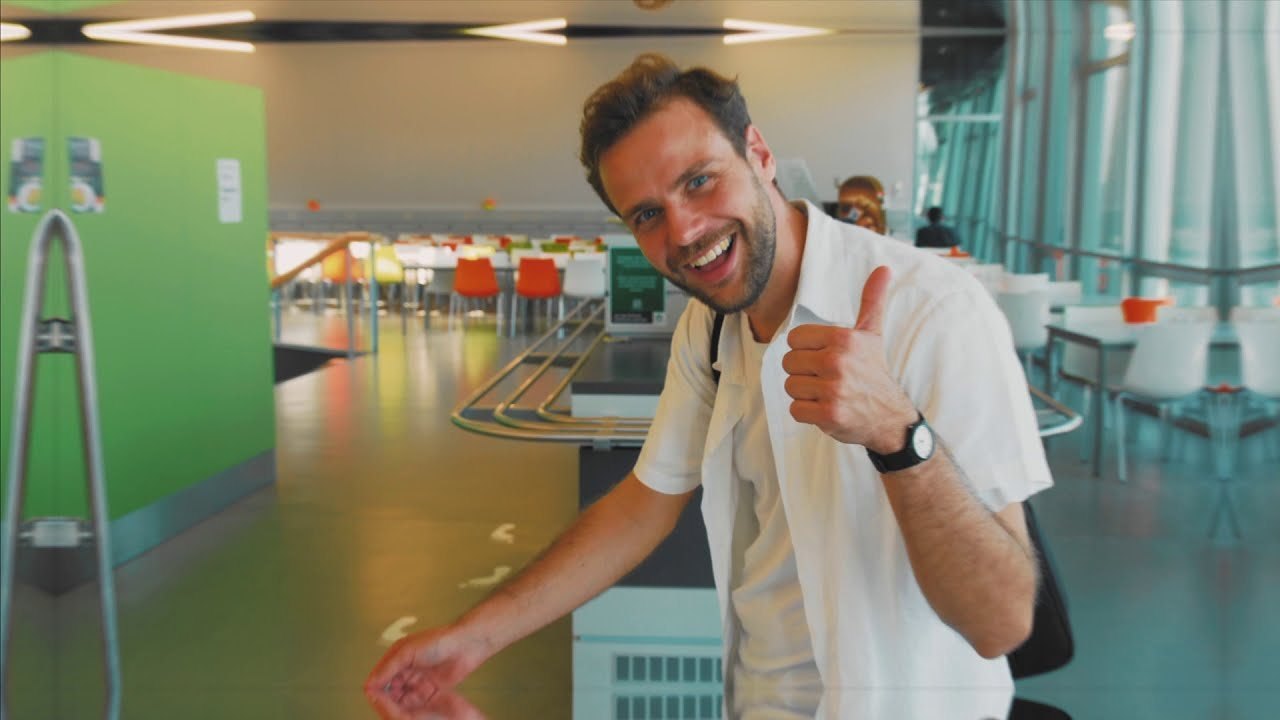
The first day at university can be confusing: a new building, long corridors and offices to find. So we created a video story for freshmen about Luka, who takes them around FRI and shows them where everything is. On-screen captions tell them which floor each office is on.
We made the video in Slovenian and English, so international students can find their way around too. FRI published it at the start of the 2020/21 academic year.
Where studying at FRI can take you
Next came a series of short stories about where students can find work and which projects are developed in FRI's laboratories. Graduates and researchers use real examples to show what the faculty's knowledge means in the real world.
Click a video to open it below its title. The videos are in Slovenian.
The series on careers and research
Three themes of the series
A better life in ever-growing cities.
By 2030, many more people are expected to live in large cities than today. The video shows how the knowledge students gain at FRI can help build so-called smart cities that offer their residents a better quality of life: from smart traffic management to Vitabits, a solution for remote monitoring of patients with chronic diseases developed in the Laboratory for Data Technologies.
Where do computer scientists work?
Three FRI graduates show where their studies took them: to air traffic control, where they build predictive models with machine learning, to developing web apps for satellite imagery, and to creating filters for Instagram and Snapchat – a job that didn't exist while they were studying.
Lectures that international students can follow too.
The video presents ON, a tool that automatically translates lectures for international students at the University of Ljubljana.
From idea to final edit
We handled the entire production of every video and were there throughout the whole process.
-
Concept
For each topic we chose an approach and a protagonist to present it: a freshman, a graduate or a researcher.
-
Script
We turned complex technology topics into short stories that are easy to follow.
-
Locations
The faculty, its laboratories and the graduates' workplaces.
-
Filming
Interviews, everyday scenes and work in the labs.
-
Graphics
Title cards and captions that explain concepts and guide viewers around the building.
-
Editing
Stories between a minute and a half and three and a half minutes long.
How the collaboration unfolded
-
December 2019
Smart city
The story of Vitabits and smart cities.
-
February 2020
Jobs of the future
Three portraits of FRI graduates.
-
September 2020
This is Luka
A welcome for freshmen in Slovenian and English at the start of the academic year.
-
December 2021
ON (Online Notes)
A presentation of the lecture translation tool.
The result
FRI now has a collection of short video stories for anyone thinking about studying computer science or just starting out. With Luka's help, freshmen find their way around the building more easily, while prospective and current students see where their studies can take them: from air traffic control to Instagram filters and smart-city solutions. The stories are published on the faculty's YouTube channel and ours.
Where this project sits in our matrix
We work across all of these layers, and any combination is possible.
- Who we worked for
- Executive leadershipCorporate communicationsHRMarketingPublic sector
- Project scope
- Small brand storyAlways-on communicationBig brand story (a full campaign)
- What we improved
- ProcessesRelationshipsContent
- How we approached it
- StrategicallyDigitally, with AICreativelyIn an advisory role
- How long?
- Short-term (up to 3 months)Mid-term (3–12 months)Long-term (a year or more)
- What we created
- DocumentsPresentationsVisual identitiesDesignWebsitesSocial mediaCopywritingPhotographyVideo storiesAnimationsPodcastsEventsWorkshops